
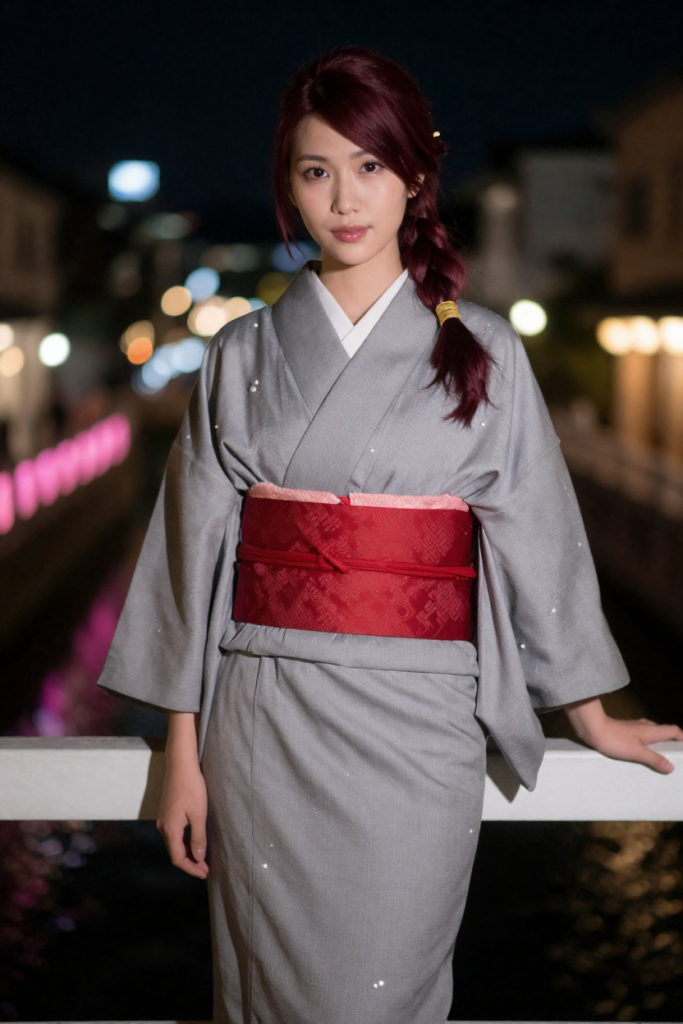
A night portrait lives a double life. It is made in the dark, under lantern light, for mood — and it is judged at noon, on a phone at full brightness, in a feed full of daylight. Frames that skip the finishing pass lose that fight quietly: blacks crush into a single slab, neon edges halo, and a portrait that glowed in the studio reads as a smudge in the wild. Finishing is where a night frame is prepared for the conditions it will actually be seen in.
Grade before you upscale
The order matters because upscaling is faithful: it sharpens what it is given, including every flaw. So the pass runs corrections first, at working size, where they are cheap. Lift the shadows just enough that detail survives a bright screen, cool any sign colour that has bled onto skin, and check the face at 100% — if the grade needs the editor, this is the moment, at 21 credits a correction rather than after the expensive step. Only a frame that already works gets finished.
Upscale to the destination, not to the maximum
Image upscaling runs at 61 credits a job on the image_upscaler model, video at 101 on video_upscaler — finishing money, spent where size is actually rewarded: set covers, storefront files with dimension minimums, print, and the hero frames a profile leads with. Routine feed frames rarely repay it, because the platform will compress them back down anyway. Match the destination’s spec and stop there; oversizing buys storage bills, not visibility.
The noon test
Finish with the rudest possible review: the frame at 100%, then at thumbnail size, imagined on a bright screen in a bright room. Faces and motion edges first, then the dark regions — do the shadows hold separation, or did they merge into one black shape? A night frame that passes the noon test keeps its mood and its subject. That is the whole craft of this studio in one check: the night is the setting, never an excuse.